Anúncios
Attendance Allowance is a key benefit for people over State Pension age. It helps with extra costs if you have a disability severe enough that you need someone to help look after you.
This is not a means-tested benefit. Your savings or income don’t affect your eligibility. It’s about the care you need, not what you earn.
This guide explains the rates, who can apply, and how to navigate the claim form. We’ll give you the practical steps to get the support you might be entitled to.
What Exactly is Attendance Allowance?
Think of Attendance Allowance as financial help for those who need support with personal care. It’s for people of State Pension age who could benefit from help, even if they don’t actually get it.
The money is intended to help you stay independent in your own home for longer. It is paid by the Department for Work and Pensions (DWP).
You can use the payment for anything you like. Many use it to pay for carers, but you could also use it for taxis to appointments or other things that make life easier.
Crucially, you don’t need to have a carer already in place to apply. The assessment is based on the help you need, not the help you currently receive.
The Two Attendance Allowance Rates
Attendance Allowance is paid at two different weekly rates. The amount you get depends on the level of care you need.
It’s important to understand which rate might apply to your situation. This is determined by the information you provide on your application form.
| Rate | Weekly Amount | Who it’s for |
|---|---|---|
| Lower Rate | £72.65 | Frequent help or supervision needed during the day, or supervision at night. |
| Higher Rate | £108.55 | Help or supervision needed throughout both day and night, or if you are terminally ill. |
These figures are for the 2024/2025 period and are reviewed annually. The DWP will assess your needs to decide which rate you qualify for.
Who is Eligible for Attendance Allowance?
To qualify for Attendance Allowance, you must meet certain conditions. These relate to your age, your care needs, and your residency status.
It’s not just about specific medical conditions. It’s about how those conditions affect your day-to-day life and ability to care for yourself.
- Age: You must have reached State Pension age to apply for Attendance Allowance. If you’re younger, you might be able to claim Personal Independence Payment (PIP) instead.
- Care Needs: You must have a physical or mental disability (or both) that is severe enough for you to need help caring for yourself or supervision to keep you safe.
- Duration: You must have needed this help for at least six months before you can be paid the allowance. You can, however, make a claim before the six months are up.
- Residency: You must be in Great Britain when you claim and have lived here for at least two of the last three years. You also need to be a habitual resident.
Important: If you are terminally ill, you can get Attendance Allowance more quickly. There are special rules that fast-track your claim.
Understanding “Help” and “Supervision”
The DWP uses specific terms like “help” and “supervision.” Knowing what they mean can make a huge difference to your application.
“Help” refers to assistance with personal tasks. This could be anything from washing and dressing to getting out of a chair or help with eating.
It also includes things that might not seem obvious. For example, needing someone to remind or encourage you to take medication counts as help.
“Supervision” means needing someone to watch over you to avoid danger. This is common for people who are at risk of falls or have conditions like dementia.
For instance, if you have seizures or become disoriented and could put yourself at risk, you might need supervision.
How to Apply: A Step-by-Step Guide
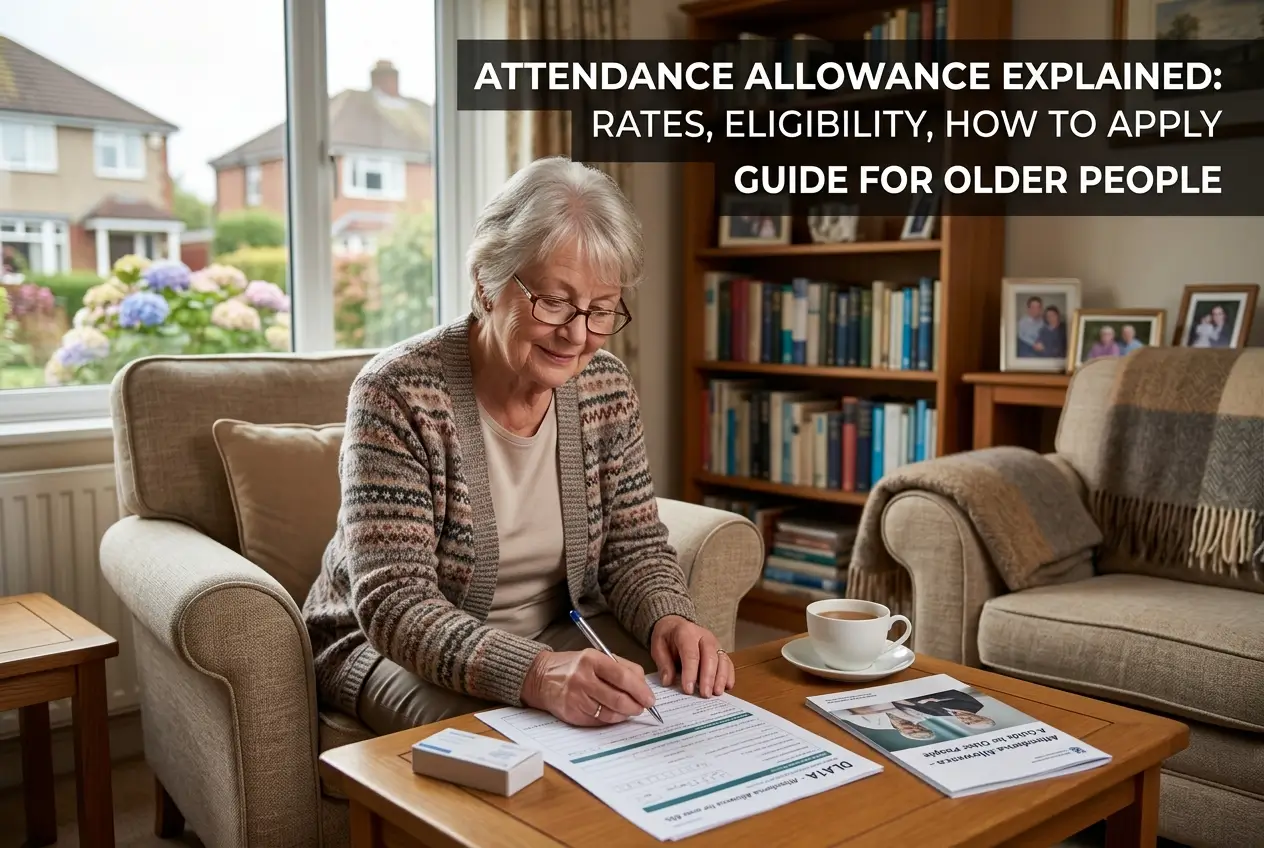
The application process for Attendance Allowance involves filling out a detailed form. Taking your time and being thorough is essential.
- Get the form: You can call the Attendance Allowance helpline on 0800 731 0122 to request a form. Alternatively, you can download the AA1 claim form from the GOV.UK website.
- Start filling it out: The date your form is received is usually the date your payments will start from if your claim is successful. So, don’t delay in sending it back.
- Gather supporting information: Collect any relevant documents. This could include prescriptions, GP details, and letters from specialists or social workers.
- Be detailed in your answers: The form is your chance to explain how your condition affects you. Don’t hold back. Describe your worst days, not just your best.
- Get help if needed: Organisations like Age UK or Citizens Advice can provide free, expert help with filling out the form. It’s a good idea to use their services.
- Post the form: Once completed, send the form to the address provided. It’s wise to make a copy for your own records before you post it.
Crucial Tips for Filling Out the Application Form
The application form is long, but it’s the most important part of your claim. Your answers will determine the outcome.
Focus on the impact of your condition. It’s not enough to list your diagnoses. You need to explain how they affect your ability to manage daily tasks.
- Explain the effort: Does a task take you much longer than it would for a healthy person? Do you need to take breaks? Does it cause you pain? Write this down.
- Describe the worst days: Don’t just describe how you are on a good day. The DWP needs to understand the full extent of your difficulties.
- Use real-life examples: Instead of saying “I struggle to cook,” explain why. For example, “I can’t lift heavy pans and I’m at risk of burning myself.”
- Don’t leave gaps: Answer every question. If a question doesn’t apply, write “N/A.” Blank spaces can cause delays or lead to the wrong decision.
- Include a diary: It can be helpful to keep a diary for a week. Note down every time you need help, what you struggled with, and how long it took.
A key tip: Assume the person reading the form knows nothing about you or your condition. Spell everything out clearly and simply.
What Happens After You Apply?
After you’ve sent your form, the waiting begins. The DWP will assess your claim, and this can take several weeks or even a few months.
You may be contacted if they need more information. They might write to your GP or any other medical professionals you’ve mentioned in your application.
In some cases, you may be asked to attend a medical assessment with a healthcare professional. This is less common for Attendance Allowance than for other benefits.
If you are asked to attend one, don’t panic. It’s just an opportunity for them to understand your needs better. Be honest about how your condition affects you.
Once a decision is made, you will receive a letter explaining the outcome. If successful, it will state which rate you’ll receive and when payments will start.
How Attendance Allowance Can Affect Other Benefits
Receiving Attendance Allowance can sometimes increase the amount you get from other benefits. This is called a “disability premium.”
It’s important to notify other benefit offices as soon as you are awarded Attendance Allowance. This could unlock extra financial support.
- Pension Credit: If you get Attendance Allowance, you might be entitled to Pension Credit or an increase in your current award.
- Housing Benefit or Council Tax Support: You could get more help with your rent or a reduction in your Council Tax bill.
Furthermore, if someone helps to care for you, they might be able to claim Carer’s Allowance. This is a separate benefit for people who spend at least 35 hours a week caring for someone.
What to Do if Your Claim is Unsuccessful
It can be very disheartening to have your claim rejected. However, you have the right to challenge the decision, and many challenges are successful.
The first step is to ask for a “mandatory reconsideration.” You must do this within one month of the date on your decision letter.
During the mandatory reconsideration, a different decision-maker at the DWP will look at your claim again. It’s a good idea to provide more evidence if you can.
Explain why you think the decision was wrong. Point to specific examples on your form that you feel were overlooked or misunderstood.
If the decision is still unchanged after the reconsideration, you can then appeal to an independent tribunal. This is a formal process, but you don’t need a solicitor.
Navigating the application can feel daunting, but it’s worth the effort. Take it one step at a time and don’t be afraid to ask for help from Citizens Advice or a local support group.