Anúncios
Struggling with the cost of prescriptions, dental care, or eye tests? You are not alone. Many people find these essential health costs hard to manage.
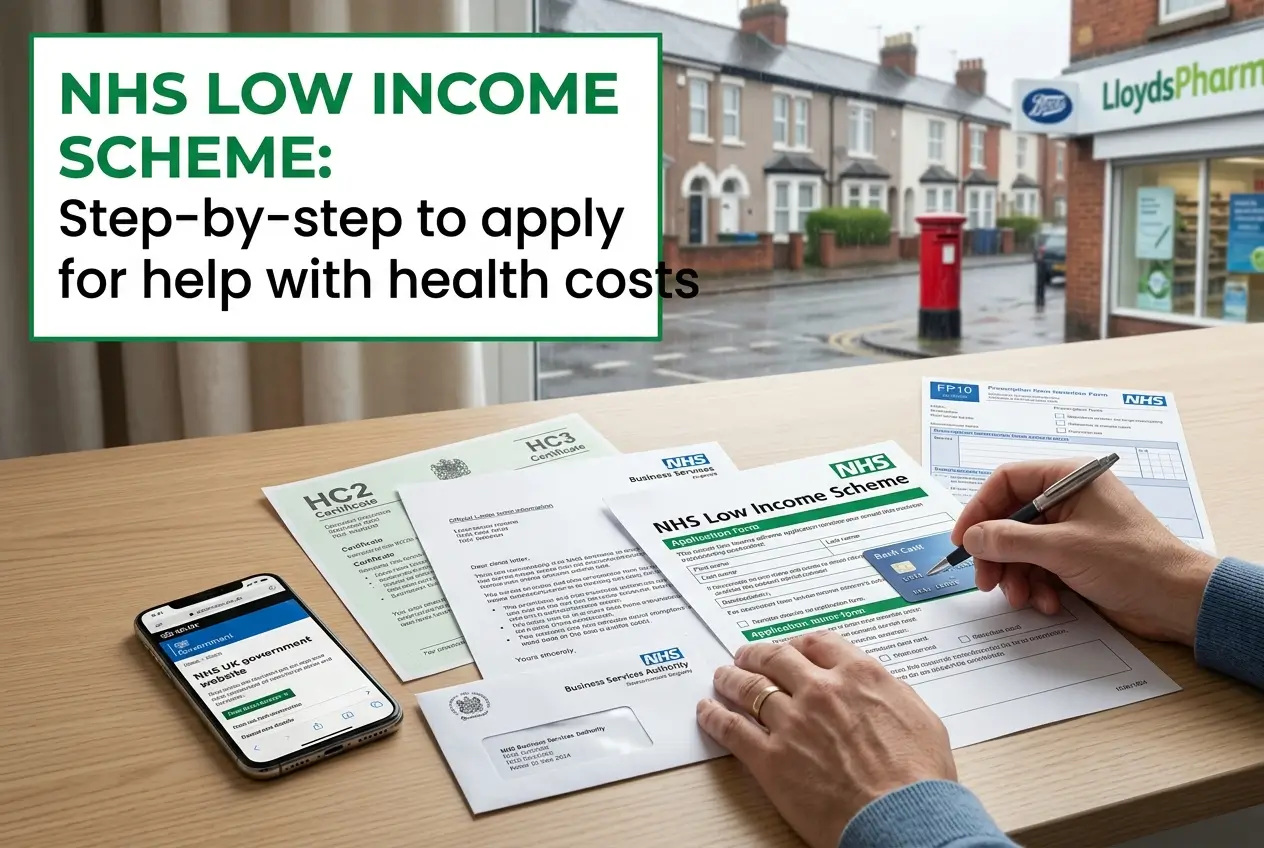
The NHS Low Income Scheme could be the help you need. It can reduce or even completely cover many of your essential healthcare charges.
This guide will show you exactly how to apply, step-by-step. We will explain who qualifies and what costs are covered, putting you in control.
What Exactly is the NHS Low Income Scheme?
Think of it as a safety net for your health expenses. It is not a cash benefit paid into your bank account.
Instead, if you qualify, you receive a certificate. This certificate proves you are entitled to help with certain NHS costs.
The scheme is designed for people whose savings, investments, or property (not including where you live) do not exceed a certain limit.
For 2024, the upper savings limit is £16,000. If you live in a care home, this limit might be higher, at £23,250.
Important: This scheme is based on your income, not just whether you receive benefits. Even if you work, you might be eligible for support.
Who Can Get Help with Health Costs?
Many people wrongly assume the scheme is only for those who are unemployed. In reality, eligibility is much wider.
The assessment compares your weekly income with your essential living costs. If your income is low, you may qualify.
You might be able to get help if you are:
- Employed with a low wage.
- Unemployed or unable to work.
- A student (especially over 19).
- A pensioner.
- Self-employed with a low profit.
- Living in a care home.
- An apprentice.
If you already receive benefits like Universal Credit, Income Support, or Jobseeker’s Allowance, you might get free NHS services automatically.
However, if you do not qualify automatically, the Low Income Scheme is your next best option to check.
What Costs Does the Scheme Cover?
Depending on your circumstances, you could receive full or partial help. This support applies to a range of essential services.
If you get full help (with an HC2 certificate), you will not have to pay for the following:
- NHS prescriptions: No charge at the pharmacy.
- NHS dental treatment: Covers check-ups and necessary treatments.
- Sight tests: Free eye examinations.
- Wigs and fabric supports: Such as surgical brassieres.
- Travel costs: Help with travel to receive NHS treatment under a specialist.
- Vouchers for glasses or contact lenses: An optical voucher to lower the cost.
If you qualify for partial help (with an HC3 certificate), you get a discount on these costs instead of them being completely free.
How to Apply for the NHS Low Income Scheme
Applying is straightforward and can be done online or by post. The key is to have your financial information ready.
Follow these steps to ensure your application is processed as quickly as possible.
- Check your eligibility first: Use the official NHS eligibility checker online. This will give you a good idea if you should apply.
- Gather your documents: You will need details of your earnings, savings, investments, and essential outgoings like rent or council tax.
- Apply online: The quickest way is through the official NHS Business Services Authority (NHSBSA) website. The online form guides you through it.
- Apply by post: If you prefer, you can get a paper HC1 form. Order one online to be delivered, or pick one up from a Jobcentre Plus or NHS hospital.
- Fill in the form carefully: Double-check all the figures you provide. Any mistakes can cause delays in your application.
Once you submit your application, the NHSBSA will assess your details. They will then send you a letter explaining their decision within a few weeks.
Understanding Your Certificate: HC2 vs HC3
After your application is assessed, you will receive a letter. This will either contain a certificate or explain why you are not eligible.
There are two types of certificates you might receive, and they offer different levels of support.
The HC2 Certificate (Full Help)
This is for those with the lowest incomes. An HC2 certificate means you are entitled to full help with health costs.
This includes free prescriptions, free NHS dental treatment, free sight tests, and vouchers towards the cost of glasses.
The HC3 Certificate (Partial Help)
If your income is a little too high for full help, you might get an HC3 certificate. This offers partial help.
The certificate will show how much you need to contribute towards your health costs. It essentially provides a discount, not a free pass.
Claiming a Refund for Past Health Costs
What if you paid for a prescription or dental care while waiting for your certificate? Good news: you may be able to claim a refund.
You can ask for a refund on charges you paid from up to three months before your certificate was issued.
To do this, you must have asked for and kept the right receipts at the time you paid.
- For prescriptions: Ask the pharmacist for an FP57 receipt and refund claim form. You cannot get one later, so ask when you pay.
- For other costs: Simply ask for a detailed receipt from your dentist, optician, or hospital.
The refund claim form (HC5) is different from the application form (HC1). You can find it on the NHSBSA website to download and post.
Important Things to Remember After Applying
Once you have your certificate, there are a few things to keep in mind to ensure you continue to get the help you need.
First, check the expiry date. Most certificates are valid for between 6 months and 5 years, depending on your circumstances.
You will need to reapply before your certificate expires to avoid a gap in your cover. You should receive a reminder letter before it runs out.
Crucial: You must report any changes to your financial circumstances. A pay rise or new savings could affect your eligibility.
Failing to report changes could mean you have to pay back charges later, so it is always best to be honest and upfront.
Where to Find Official Help and Support
It is vital to use only official sources for information and applications. This protects your personal data and ensures you get accurate advice.
The main place for all information is the NHS Business Services Authority (NHSBSA) website.
Here you can find the online application form, the eligibility checker, and downloadable forms like the HC1 and HC5 refund form.
If you need to speak to someone, you can call the official helpline. Be wary of any unofficial websites that ask for money to “help” you apply.
Remember, applying for the NHS Low Income Scheme is completely free. Never pay anyone to assist you with your application.
Do not let health costs become a barrier to getting the care you need. Check if you are eligible today and take the first step towards support.