Anúncios
Navigating financial support for your family is a top priority. Child Benefit is a key payment designed to help with the costs of raising children.
This guide will show you exactly how to claim it and manage your account.
We’ll cover eligibility, payment schedules, and how to update your details, putting all the essential information in one place for you.
What Exactly is Child Benefit?
Child Benefit is a regular payment from the government to help with the costs of raising a child. It’s paid to anyone responsible for a young person.
You don’t need to have paid National Insurance contributions to qualify for it. It’s a separate system designed to support families directly.
Importantly, making a claim can also help you get National Insurance credits. These count towards your State Pension, so it’s vital even if you don’t work.
Heads up: Only one person can get Child Benefit for a child. You must decide who should claim it if you are a couple.
Who is Eligible to Claim Child Benefit?
The rules for eligibility are straightforward. It’s designed to cover most people who are raising a child in the UK.
You can claim Child Benefit if you are responsible for a child who is:
- Under 16 years old: This is the standard age limit for all children.
- Under 20 years old: If they stay in approved full-time education or unpaid training.
Being ‘responsible’ for a child usually means they live with you or you pay towards their upkeep, like for food and clothes.
You typically need to be living in the UK to qualify. There are different rules if you or your child move abroad, so always check the official guidance.
How Much Will I Receive?
The amount you get is a set weekly rate. There are two different rates, and the total depends on how many children you are claiming for.
The rates are set by the government and are usually updated each tax year in April. It’s always a good idea to check the latest figures.
For the 2024 to 2025 tax year, the weekly rates are:
- For your eldest or only child: £25.60 per week.
- For each additional child: £16.95 per week.
However, if you or your partner have an individual income over £60,000, you may have to pay a tax charge. This is known as the High Income Child Benefit Charge.
We’ll explain more about that charge later in this guide. It’s a key detail that can catch people out if they aren’t aware of it.
Step-by-Step: How to Make Your First Claim
Making your first claim is a straightforward process. The key is to do it as soon as your child is born or comes to live with you.
Child Benefit claims can only be backdated for up to 3 months, so acting quickly ensures you don’t miss out on payments you’re entitled to.
Here’s a simple breakdown of the steps you need to follow:
- Get your documents ready: You’ll need your child’s original birth certificate and your National Insurance number.
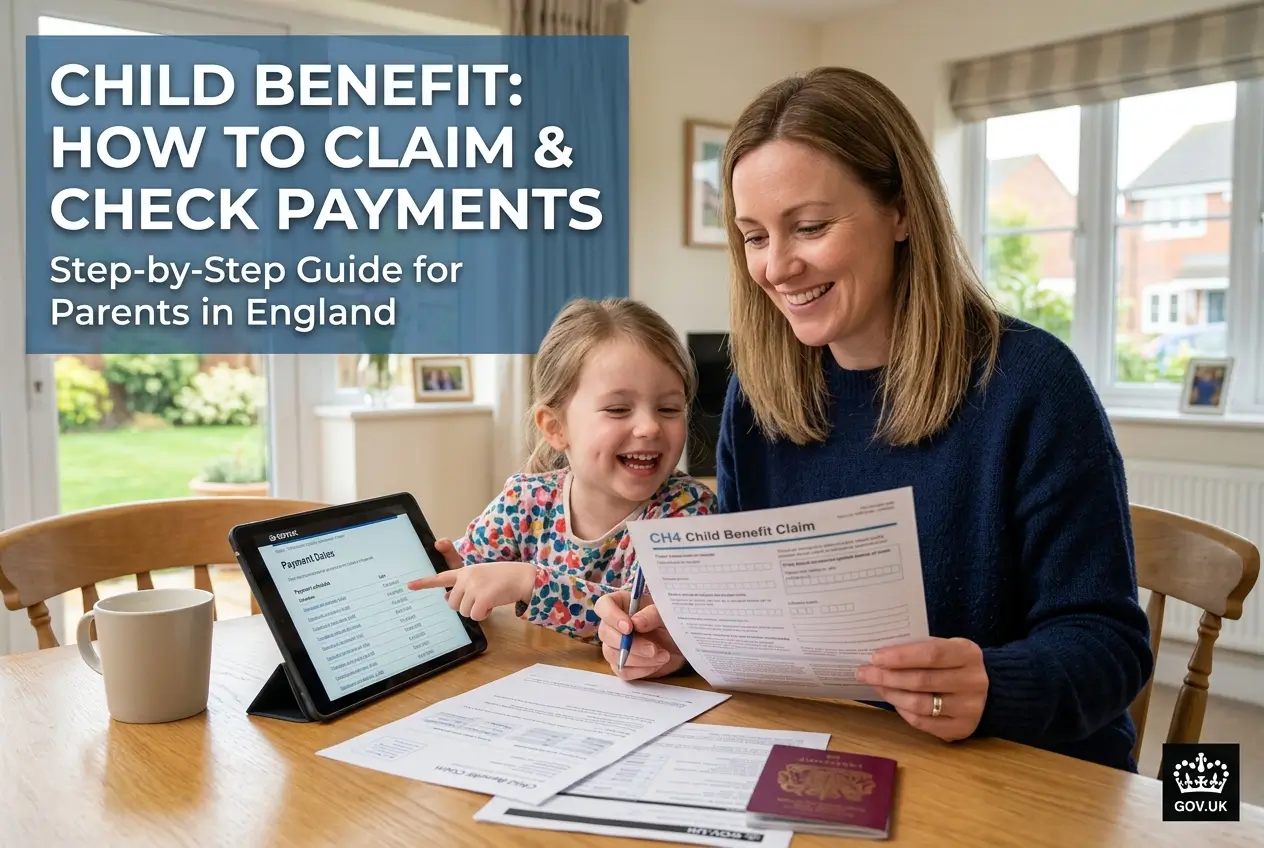
- Complete the claim form (CH2): You can either fill this in online via the GOV.UK website or print it out and complete it by hand.
- Submit your form: If you claim online, follow the final instructions. If using a paper form, send it to the Child Benefit Office address on the form.
It can take up to 16 weeks to process a new claim, so be patient. You will receive a letter confirming when your payments will start.
When Are Child Benefit Payments Made?
Once your claim is approved, you’ll receive payments regularly. Most people are paid every 4 weeks, usually on a Monday or a Tuesday.
If you are a single parent or receiving certain other benefits, you may be able to have the money paid weekly instead. You can request this when you claim.
Bank holidays can change your payment day. If your payment is due on a bank holiday, you’ll usually be paid on the working day before.
For example, if your payment is due on a Monday which is a bank holiday, you should receive the money on the previous Friday.
Keeping Your Details Up to Date: Why It’s Crucial
It is your responsibility to tell the Child Benefit Office about any changes in your circumstances. This is essential to ensure you’re paid correctly.
Failing to report changes could mean you are overpaid and have to pay money back. Or you could miss out on money you’re entitled to.
You must report changes as soon as they happen. The most common changes include:
- Your bank account details change: This is vital to make sure payments reach you.
- You change your address: All correspondence will be sent to your registered address.
- Your child’s circumstances change: For example, they leave approved education or training.
- You change your name or marital status: This helps keep your records accurate.
The easiest way to report most changes is through the government’s online service or by using the HMRC app.
The High Income Child Benefit Charge Explained
This is a rule that can affect families where one partner has an adjusted net income of over £60,000 per year.
If you or your partner earn over this amount, you will be liable to pay a tax charge, which effectively repays some or all of your Child Benefit.
The charge is 1% of the Child Benefit amount for every £200 of income you have over £60,000. It’s a sliding scale.
If your income reaches £80,000 or more, the tax charge will be equal to the full amount of your Child Benefit. At this point, you receive no net financial gain.
Important choice: You can choose to opt out of receiving payments to avoid the tax charge, but you should still ‘claim’ the benefit.
Claiming without taking payments ensures you still get National Insurance credits, which protect your future State Pension entitlement. This is crucial.
The person liable for the charge must declare it on a Self Assessment tax return each year.
What to Do If Your Payment is Late or Missing
It can be worrying if a payment doesn’t arrive when you expect it. The first step is not to panic. There’s usually a simple explanation.
Here’s what you should do:
- Check the date: Double-check your payment schedule and look out for any bank holidays that might have shifted the date.
- Check your bank account: Make sure you are checking the correct bank account that is registered with the Child Benefit Office.
- Wait until the end of the day: Payments can arrive at any time up until midnight on the due date.
If the payment is still missing after you have taken these steps, you should then contact the Child Benefit helpline to investigate the issue.
They will be able to check their systems and see if there is a problem with your claim or payment instruction.
Contacting the Child Benefit Office
If you need help with your claim or have specific questions, it’s best to go directly to the official source.
Be very wary of unofficial websites or services that ask for money to help you. All official government support is free.
Here are the official ways to get in touch:
- Online: Use the GOV.UK service to manage your Child Benefit online, report changes, and check your details.
- Phone: You can call the Child Benefit helpline for urgent queries. Have your National Insurance number ready when you call.
- Post: For non-urgent matters or sending forms, you can write to the Child Benefit Office at their official address.
Using the official channels ensures your personal information is secure and that you receive accurate advice from HMRC staff.
Now you have the key information, check your details are up to date and make sure you’re getting the support you are entitled to.