Anúncios
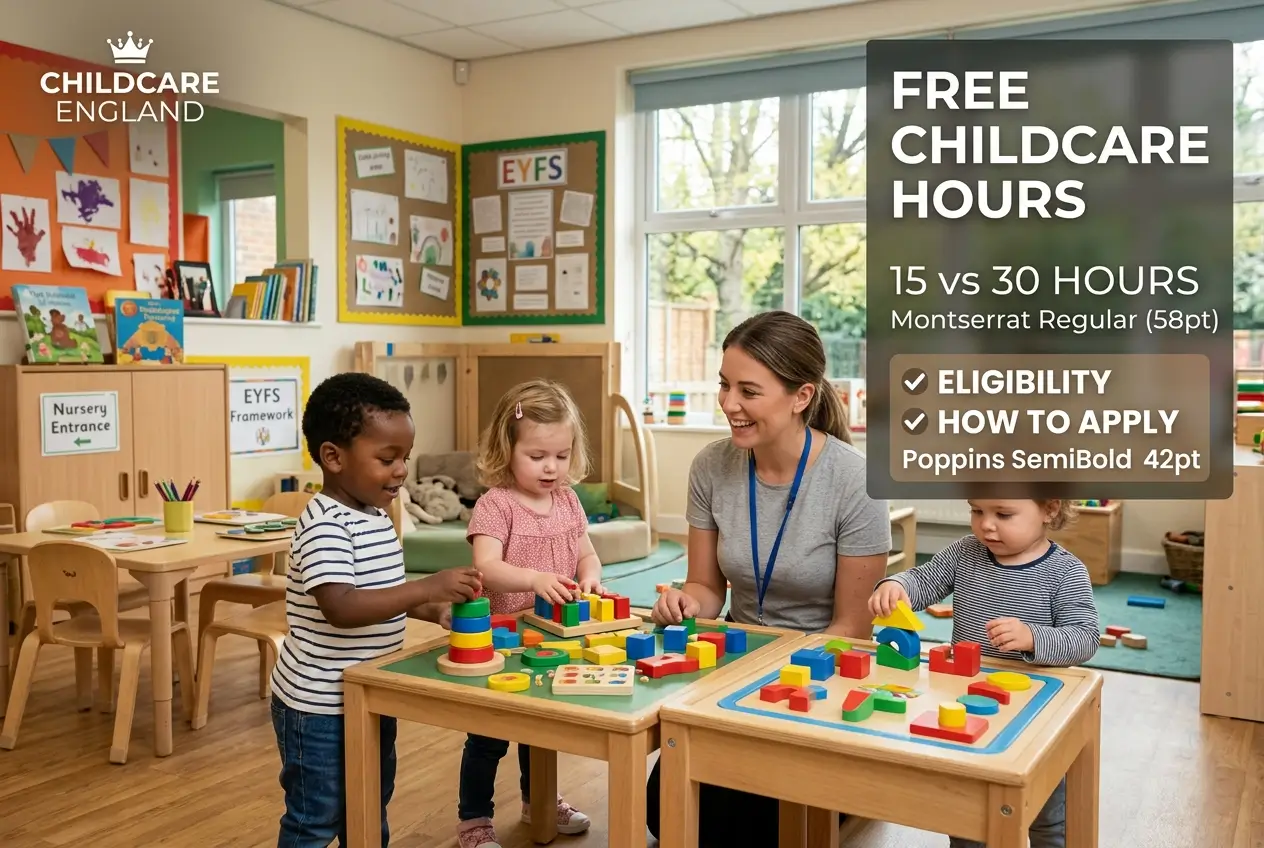
Understanding free childcare hours in England can feel complex, but it’s a vital support for many families. This guide breaks down the 15 and 30-hour schemes.
We’ll explain exactly who is eligible for each offer, especially with the new rules rolling out. We’ll also show you precisely how to apply for your funding code.
Getting this right can save you a significant amount on childcare costs. Let’s make sure you get the support you’re entitled to.
What Are the Free Childcare Schemes?
The government offers funded childcare hours to help parents manage costs and return to work. These are often called “free hours.”
There are two main schemes, but they are expanding. The classic offer is 15 hours for all 3 and 4-year-olds, regardless of what their parents do.
For working parents, there’s an extended offer of 30 hours of free childcare per week. This has stricter eligibility rules based on your income.
Important: These hours are for 38 weeks of the year, matching school term time. Some providers let you “stretch” the hours over 52 weeks, meaning fewer hours per week.
The Big Change: Expansion of Free Hours
The government is rolling out a major expansion of the scheme. This will eventually offer support to working parents of children as young as 9 months old.
This is happening in phases, so it’s crucial to know which date applies to your family. Missing the deadline means waiting until the next term.
Here is the official timeline for the new entitlements for working parents:
- From April 2024: Eligible working parents of 2-year-olds can get 15 hours of free childcare.
- From September 2024: The 15 hours offer is extended to eligible working parents of children from 9 months old.
- From September 2025: This group will become eligible for 30 hours of free childcare per week.
Who Qualifies for 15 Hours of Free Childcare?
There are two different routes to get 15 hours of funded childcare. One is universal, while the other depends on your circumstances.
All children in England get 15 hours of free childcare per week from the term after their 3rd birthday. This is automatic and not based on income.
Some 2-year-olds are also eligible for 15 hours if their parents receive certain benefits. This is designed to support families on lower incomes.
You may qualify if you get any of the following:
- Income Support
- Income-based Jobseeker’s Allowance (JSA)
- Income-related Employment and Support Allowance (ESA)
- Universal Credit, and your household income is £15,400 a year or less after tax
- The guaranteed element of Pension Credit
- Child Tax Credit or Working Tax Credit, with an annual gross income of no more than £16,190
Are You Eligible for the Extended 30 Hours?
The 30 hours scheme is specifically for working families. It’s designed to make it easier for parents to work, increase their hours, or stay in employment.
To qualify, you (and your partner, if you have one) must meet certain criteria. The main one relates to how much you earn.
Here’s a simple breakdown of the main eligibility rules:
- Work Status: You, and your partner, must expect to earn a certain amount over the next 3 months.
- Minimum Income: This should be at least the National Minimum Wage or Living Wage for 16 hours a week on average.
- Maximum Income: You will not be eligible if you or your partner have an expected ‘adjusted net income’ over £100,000 in the current tax year.
- Your Child: Must be the right age for the scheme (3 or 4 years old, or younger under the new rollout).
You can still be eligible if you’re on maternity, paternity, or adoption leave. The same applies if you’re unable to work because you are disabled or have caring duties.
How to Apply for Your Free Childcare Code
Applying for the 30 hours scheme or the new offers for working parents is done online. You do not need to apply for the universal 15 hours for 3 and 4-year-olds.
The process involves getting an eligibility code from the government, which you then give to your chosen childcare provider.
- Visit the official website: Go to the government’s Childcare Choices website. This is the only place to apply.
- Check your eligibility: The site has a simple calculator to see what help you can get.
- Start your application: You will need to create a Government Gateway account if you don’t already have one.
- Provide your details: You’ll need your National Insurance number, and your partner’s if applicable. You may also need your UTR if self-employed.
- Receive your code: Once your application is approved, you will get a 11-digit eligibility code.
- Give the code to your provider: Share this code with your nursery or childminder, along with your National Insurance number and your child’s date of birth.
The Reconfirmation Trap: Don’t Lose Your Hours
This is one of the most important parts of the process. Getting your code is not a one-time job. You must reconfirm your eligibility every three months.
You will receive a reminder email or text message from HMRC. It is vital that you act on this reminder promptly.
Warning: If you miss your reconfirmation deadline, you will fall into a ‘grace period’. After this, you will lose your funded hours for the following term.
The process is simple. You just log into your childcare account and check that your details are still correct. Set a reminder on your phone to avoid any issues.
What Do the “Free” Hours Actually Cover?
It’s important to understand that the funding covers the cost of the childcare itself, but not extras. This can sometimes cause confusion for parents.
Providers are allowed to charge for additional items and services. This is a common practice, so you should always budget for some extra costs.
These extras can include:
- Meals: Breakfast, lunch, and snacks are usually not included.
- Consumables: Items like nappies, wipes, and sun cream.
- Activities: Special classes like music, yoga, or trips outside the nursery.
Before you sign a contract, ask for a clear breakdown of all charges. A good provider will be transparent about what is and isn’t covered by the funding.
Finding a Childcare Provider That Accepts Funding
Not all childcare providers are registered to offer the funded hours. You should check this early in your search to avoid disappointment.
Approved providers can include childminders, pre-schools, day nurseries, and nursery classes in schools. The best place to start your search is with your local council.
Your local authority will have a Family Information Service. They publish a list of all providers in your area that are registered to deliver the funded entitlements.
Remember to check their Ofsted rating. This gives you an independent assessment of the quality and safety of the care they provide.
What If You’re Not Eligible? Other Support Available
If you don’t qualify for the 15 or 30 hours schemes, don’t worry. There are other government schemes that can help make childcare more affordable.
Tax-Free Childcare is a popular option. For every £8 you pay into an online account, the government will add an extra £2, up to £2,000 per child per year.
This is for working parents (including self-employed) and has different income rules to the 30 hours scheme. You can use it alongside the universal 15 hours.
If you claim Universal Credit, you may be able to claim back up to 85% of your childcare costs. This is often a better deal for those on lower incomes.
The Childcare Choices website has a calculator that will show you all the schemes you are eligible for, helping you pick the best one for your family’s needs.